

Toxic behavior is any in-game action or message that drags down match quality for the rest of the lobby. It covers more than hate speech: rage-quits, feeding, or trolling voice comms can all trigger penalties even if you never touch any cheat software.
In this guide you will learn:
- The detection tools games use to flag toxic players;
- Every major form of disruptive behavior and the ban risk for each;
- The penalty ladder from quick chat mutes to permanent account bans;
- How honor and reputation systems reward reform;
- Practical appeal tips if you get banned for a heat-of-the-moment mistake.
Toxicity Detection and Enforcement
Studios stack multiple safeguards to spot bad behavior. Automatic chat filters catch slurs, AI tools grade voice lines, and match data highlights grief patterns. If a chat slip goes unnoticed, a replay review or a wave of player reports can still flag the account. Once the system sees a clear pattern, it can mute or ban you on the spot, then pass the case to a human moderator for a final call.
- Player reports – manual flags escalate to trust and safety teams. This can also happen while you’re getting boosted or sharing your account.
- Real-time chat filters – banned-word lists trigger auto-mutes or instant 24 hour chat lockouts.
- Voice-to-text AI – transcribes comms, scores profanity, hate speech, threats.
- Behavior-score models – track grief deaths, abandon rate, mass pings, and mute counters.
- AFK / idle timers – kick or soft-ban players who stop input for more than X seconds.
- Reputation systems – Honor levels (LoL), Endorsement scores (Overwatch), Karma (Rocket League).
- Match-data heuristics – flag intentional feeding, friendly damage, spawn camping.
- Auto-mutes and temp bans – racial slur or doxx attempt triggers an immediate mute, escalating on repeat.
- Cross-account correlation – ties toxic smurfs to a main via IP, payments, or matching hardware IDs.
Types of Toxicity in Games
| Method | Ban Risk |
| Hate speech / slurs (chat or voice) | Very high |
| Violent threats | Very high |
| Doxxing / sharing personal data | Very high |
| Offensive in-game name / clan / guild | Very high |
| Flaming (non-slur hostile chat) | High |
| Intentional feeding / inting / throwing | High |
| Griefing objectives (blocking, trolling) | High |
| Stream sniping | High |
| Teamkilling / friendly-fire abuse | High |
| AFK / rage-quit / idle farming | Medium |
| Ping / chat spam / mic spam | Medium |
| Smurfing to stomp new players | Low |
| Spawn camping / perpetual ganking | Low |
| Kill-steal or loot-steal trolling | Low |
Hate Speech and Slurs
- What it is and how it looks:
- Racial, homophobic, or gendered slurs in text or voice. One word can trigger an instant mute or suspension in Valorant or Overwatch 2.
- Most common in:
- Valorant, League of Legends, Overwatch 2, CS 2, Call of Duty.
- Impact on other players:
- Immediate psychological harm, match quits, spike in reports.
- Penalty insight / ban-appeal tip:
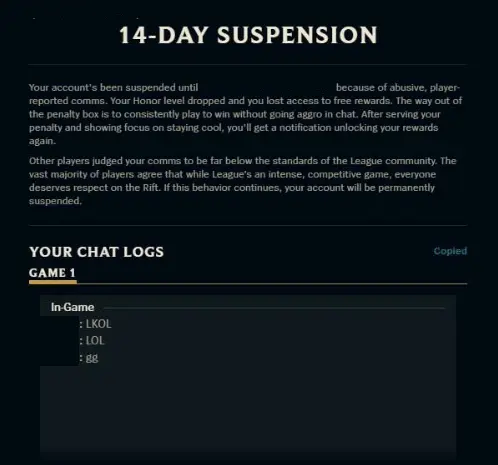
- First offense can be a 24-hour chat ban, repeat slurs often lead to permanent account bans. If a filter mis-read another language, include the match ID and explain the context when contesting a LoL chat suspension.
Flaming
- What it is and how it manifests:
- Non-slur rage-typing, blame storms, calling teammates “trash” every death or the classic “gg ez”.
- Most common in:
- Dota 2, Overwatch 2, LoL, CS 2.
- Impact on other players:
- Tilts allies, increases surrender votes, lowers behavior score.
- Ban appeal tip:
- Point to honor-level drops as your proof of reform, promise muted-chat games, and enable the game’s built-in profanity filter when appealing a OW 2 ban.
Teamkilling / Friendly-Fire Grief
- What it is and how it looks:
- Killing or damaging teammates on purpose to ruin the round.
- Most common in:
- Rainbow Six Siege, Rust, Escape from Tarkov, Hardcore CoD playlists.
- Impact on other players:
- Match loss, wasted ranking points, report spikes.
- Penalty insight / ban-appeal tip:
- Accidental TKs usually trigger a short reverse-friendly-fire timer. For genuine accidents provide the match replay and apologize when trying to get a R6 Siege ban lifted.
Intentional Feeding / Throwing
- What it is and how it looks:
- Purposefully dying, running it down mid, or sabotaging objectives.
- Most common in:
- League of Legends, Dota 2, Overwatch 2.
- Impact on other players:
- Loses ranked MMR, wastes 20-40 minutes.
- Penalty insight / ban-appeal tip:
- Attach match IDs and damage graphs to prove connection issues rather than intent. Riot often issues 14-day LoL suspensions for first-time throwers.
AFK / Rage-Quit
- What it is and how it looks:
- Leaving or idling after a bad start.
- Most common in:
- Apex Legends, Valorant, Overwatch 2, Rocket League.
- Impact on other players:
- Forced 2-v-3 or bot replacement.
- Penalty insight / ban-appeal tip:
- Bundle PingPlotter traces and crash dumps to prove a disconnect, then ask support to roll back the cooldown. See our Apex Legends unban guide for the exact Easy Anti-Cheat log and match-ID files they request.
Objective Grief (Refusing Payload / Bomb Plant)
- What it is and how it looks:
- Standing on the cart backwards, never planting the spike, stalling match timer.
- Most common in:
- Overwatch 2, CS 2, Valorant, Team Fortress 2.
- Impact on other players:
- Forces draw or loss, wastes match time.
- Penalty insight / ban-appeal tip:
- Attach voice-chat clips that show you followed a teammate’s call, and you were not trolling. For a CS 2 unban appeal, bundle that audio with the match ID so agents hear the strat in context.
Spawn Camping & Newbie Ganking
- What it is and how it looks:
- High-level players farming new spawns with no escape route.
- Most common in:
- DayZ, Rust, Destiny 2 Gambit, WoW low-level zones (or the famous Corrupted Blood incident).
- Impact on other players:
- Prevents progression, causes quits.
- Penalty insight / ban-appeal tip:
- Blizzard often hands 3-day WoW suspensions for repeated lowbie ganks. Show quest logs proving you left the zone after the first kill.

Body-Blocking / Path Blocking
- What it is and how it looks:
- Standing in doors, stairwells, or choke points so teammates cannot exit.
- Most common in:
- CS 2 casual, WoW dungeons, Minecraft servers.
- Impact on other players:
- Frustration, wasted consumables, death.
- Penalty insight / ban-appeal tip:
- Provide clip showing collision bug rather than intent; many WoW unban appeals succeed if it was physics desync.
Smurfing to Stomp Beginners
- What it is and how it looks:
- High-skill player on fresh account farming low-rank lobbies.
- Most common in:
- Overwatch 2, Fortnite, League of Legends, Valorant.
- Impact on other players:
- Unfair skill gap, high quit rate in new player pool.
- Penalty insight / ban-appeal tip:
- During a Fortnite ban appeal, explain the alt’s purpose (such as an account started on PS5), attach both account IDs plus a shared device serial and recent V-Bucks receipt, then ask for a skill-bracket reset.
Offensive Names / Guild / Clan Tags
- What it is and how it manifests:
- Usernames, trainer names, guild or clan tags that contain profanity, hate symbols, or impersonate staff.
- Most common in:
- Pokémon GO, Call of Duty lobbies, Dota 2.
- Impact on other players:
- Auto-filter triggers, instant reports, brand risk for the studio.
- Ban appeal tip:
- Change the name first, then submit a screenshot of the new tag. Before submitting a Pokemon Go unban appeal, change your Trainer name from the Settings menu (keep in mind you can only change it a limited number of times).
Stream Sniping
- What it is and how it manifests:
- Watching a live streamer’s feed to track location, then gank or leak info in chat.
- Most common in:
- Dead by Daylight, Fortnite, Apex Legends, DayZ, Escape from Tarkov.
- Impact on other players:
- Ruins competitive integrity, drives creators off the game.
- Ban appeal tip:
- Share your own VOD proving delay on your end, or show you were in a different server shard. Follow the evidence checklist in our DayZ ban appeal guide to structure the ticket.
Mic Spam / Music Bots
- What it is and how it manifests:
- Open-mic blasting music, soundboards, or high-gain background noise that drowns team comms.
- Most common in:
- Rust, Escape from Tarkov, Call of Duty voice chat.
- Impact on other players:
- Forces mass mutes, tilts teammates, spikes report counts.
- Ban appeal tip:
- Provide a fresh DxDiag audio report, show push-to-talk enabled, and link a short clean-mic test. Our Rust ban appeal guide lists the files Facepunch asks for.
Excessive Ping or Chat Spam
- What it is and how it looks:
- Holding the ping wheel or macro spamming “Help!” every second.
- Most common in:
- League of Legends, Call of Duty, Apex Legends.
- Impact on other players:
- Audio/visual clutter, distraction.
- Penalty insight / ban-appeal tip:
- The first strike is usually a short chat restriction. Turn down macro repeat rates, take a settings screenshot, and ask support to review the mute length. If you’re appealing to get unbanned from CoD, include that screenshot plus the match ID so Activision can verify the spam came from a stuck macro, not deliberate griefing.

Penalty Ladder for Toxicity Offenses
Before a studio swings the permanent-ban hammer, most run through a stepped system of warnings and lockouts. The chart below shows how a single slur might start with a 24-hour mute and, if behavior doesn’t improve, climb to a permanent account ban.
| Offense | Typical penalty |
| Single slur | 24-hour mute |
| Repeat slurs / poor behavior | 7-day chat ban |
| Teamkilling or feeding | 1-3 day match ban or ranked lock |
| Multiple AFKs | 1-14 day queue cooldown |
| Hate speech | Permanent account ban |
Evidence Checklist for Toxicity Ban Appeals
Before you hit “Submit” on your toxicity ban appeal, try to gather at least some of these items, depending on the nature of your ban:
- Match ID or replay link – the quickest way for Support agents to check the flagged round.
- Full chat transcript – provide (or ask for) the entire log or attach screenshots so context isn’t lost.
- Clip or VOD from your POV – a 30-second video clarifies whether actions were accidental.
- Crash or disconnect logs – proves an AFK or rage-quit was a tech fault, not a deliberate leave.
- PingPlotter / WinMTR trace or ISP ticket – proves network spikes caused sudden lag / disconnection.
- Honor, endorsement, or behavior-score screenshot – evidence of recent clean play.
- Screenshot of the ban message – shows exact error code, date, and platform.
- Audio settings shot (push-to-talk enabled) – useful when contesting mic-spam bans.
Last but not least, a toxicity ban appeal should lead with ownership and remorse: apologize for the behavior, outline the steps you’ve taken to reform and prevent a repeat offense, and never shift blame to opponents, siblings, or “account sharers”. Reviewers look for accountability first.
Reputation Systems That Reduce Toxicity
Modern games reward good manners as much as they punish bad ones. Honor points, endorsements, and hidden behavior scores quietly shape your matchmaking pool and bonus perks. A healthy reputation isn’t just a badge, as it can shorten queue times and buffer you against accidental reports.
- League of Legends Honor – climb from Honor 0 to 5 for rewards; drops on reports.
- Overwatch Endorsements – teammates endorse good comms or teamwork; low score limits ranked.
- Dota 2 Behaviour Score – hidden 0-10k metric; low scores add long queue times.
- Rocket League Karma – quick-chat upvotes grant XP boosts; constant Who-Asked spam tanks your rating.
- Xbox Community Standards – good standing required for voice chat on the platform.
Toxicity Reformation Tips
A meltdown in one match does not have to brand you forever. Most games come with built-in “cooldown” features that help heated players reset, and their support teams look for proof that you used them before handing out heavier penalties.
- Use built-in cooldowns as a reset – Some auto-silences lift after several clean matches.
- Mute first, report later – the fastest way to avoid a follow-up penalty is to block toxic chat on the spot, then submit a calm report afterward.
- “/mute all” in League of Legends – typing this at the start of a tilt-prone game cuts off enemy taunts and keeps your Honor from dropping; see our guide on avoiding a LoL toxicity ban.
- Take a queue break between losses – step away after a loss streak; data shows back-to-back defeats spike report rates.
- Play with premades – queue with friends or verified Discord partners to cut random lobby toxicity in half.
- Opt-in coaching replays – Valorant’s post-match timeline highlights reckless peeks and early tilts; reviewing these clips shows real reform when submitting a Valorant ban appeal.
- Use pings instead of chat – the ping wheel in most games, including Apex or Fortnite, conveys your needs without opening chat rage bait.
- Avoid stacking while on thin ice – smurf duos draw more reports; solo-queue until your Honor, Endorsement, or Behavior Score climbs back to the safe zone.
- Clean slate via Steam cooldown – a first TK lockout in CS 2 expires in 30 minutes; use that time to tweak push-to-talk keys and lower mic gain.
- Apologise quickly – a short “my bad” after an accidental teamkill stops chain reports in games like Rainbow Six Siege and shows good faith during appeal.
- Log out on tilt – Destiny 2’s Crucible ban algorithm weighs back-to-back quits heavily; closing the game after one DC preserves your reputation metric.
Follow these habits consistently and most reputation systems (such as LoL Honor, Overwatch Endorsements, or Dota Behavior Score) will climb back to neutral within a week or two of clean play.
Toxicity bans don’t come out of nowhere. The same systems that mute or suspend you also track every clean match, honor point, and positive endorsement you earn afterward.
Use the tools we covered – filters, cooldown breaks, self-mute keys – to steer clear of the detection net, and keep this evidence checklist handy in case you ever slip up.
Play it smart, own your mistakes, and you’ll spend more time winning games and less time writing appeals, and help make every lobby a little better for the next match.